
Animated Explainer Videos: What Research Says About Their Effectiveness in Marketing, Training, and Education

Explainer videos are everywhere.
They introduce new products.
Break down scientific discoveries.
Onboard new employees.
Explain public policy.
And teach complicated systems in two minutes flat.
But what does academic research actually say about how explainer videos work and when they’re most effective?
A 2022 review published in Frontiers in Communication took a close look at dozens of studies on online explainer videos. Instead of focusing on one specific campaign or platform, the authors zoomed out to analyze what researchers collectively know about how these videos function, what they’re good at, and where the gaps still are.
For brands, universities, and organizations thinking about investing in animation, the conclusions are encouraging—and revealing.
Let’s unpack the key findings and what they mean for different types of explainer videos: corporate marketing, employee training, and educational or research-driven storytelling.
First, What Counts as an “Explainer Video,” Anyway?
One of the paper’s most interesting starting points is that no one has fully agreed on a single definition.
Across academic studies, explainer videos are described as:
Short-form videos that clarify complex topics
Often animated or heavily visual
Guided by narration
Structured around a clear narrative or logical flow
Designed for broad, non-expert audiences
Distributed primarily online
Sound familiar? That’s essentially the same DNA behind most modern animated explainer videos used in marketing, training, and education today.
The takeaway: explainer videos aren’t just a stylistic trend, they’re a recognizable communication format that researchers are actively trying to understand.
Key Finding 1: Explainer Videos Improve Understanding
Across the studies reviewed, the most consistent result was this:
Explainer videos tend to increase knowledge and comprehension, especially when compared to no multimedia or poorly designed instructional materials.
Many experiments used pre-test and post-test designs, measuring what people knew before watching and what they retained afterward. In numerous cases, viewers walked away with a clearer grasp of the subject.
Why? Because explainer videos combine:
Spoken narration
Visual metaphors
Motion graphics
Sequential storytelling
Simplified models of complex systems
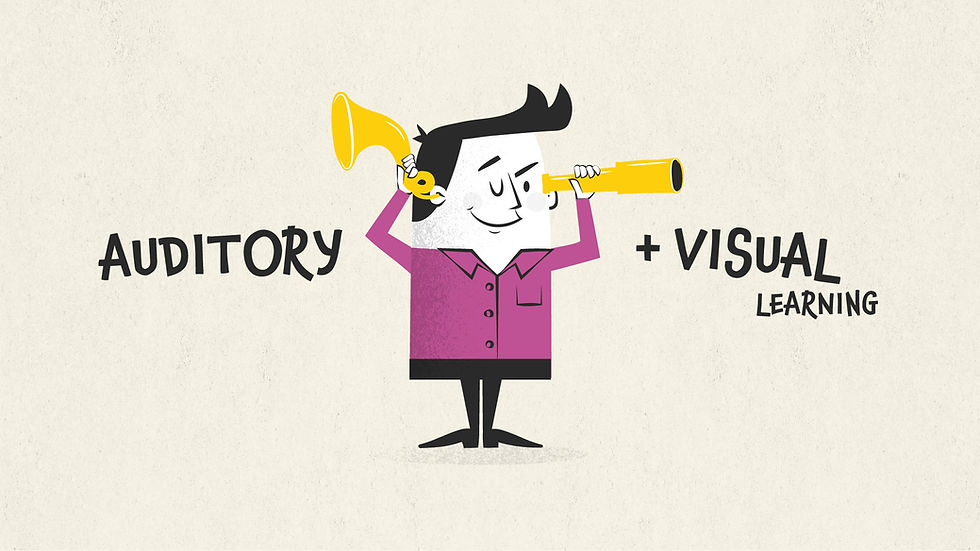
This aligns with what cognitive science has shown for years: people learn better when information is presented both verbally and visually in coordinated ways.
What This Means for Corporate Explainers
For companies explaining products, services, platforms, or new processes, this is powerful validation. Animated explainers work well when:
The offering is abstract (technology, services, finance, technology)
The workflow is complex
The value proposition needs unpacking
Multiple audiences need the same message
Instead of long PDFs or dense slide decks, animation helps audiences build a mental model quickly, which is often the difference between confusion and conversion.
What This Means for Training Videos
Training and onboarding benefit directly from this learning effect. Research-backed implications include:
Explainers are effective for procedural instruction
They help introduce systems before hands-on practice
They can standardize messaging across large organizations
They reduce cognitive overload when well structured
For compliance training, cybersecurity awareness, safety protocols, or data privacy education, animation isn’t just engaging. It supports real comprehension.
What This Means for Educational and Research Communication
For universities, nonprofits, and research institutions, the findings reinforce why animated explainers are so valuable for public outreach. They can:
Translate technical and academic language into everyday terms
Visualize invisible processes (artificial intelligence, politics, climate change)
Provide narrative framing around new discoveries
Support science communication and public literacy
In short, explainer videos are well suited to bridge the gap between academic experts and the general public.
Key Finding 2: People Prefer Video, Especially When Topics Are Complex
The review also notes that viewers often report higher engagement and preference for video-based explanations compared to text alone. That doesn’t mean text has no role. But when audiences encounter complicated ideas online, video frequently feels more approachable and less intimidating.
This matters because:
Understanding is step one.
Motivation is step two.
Once people understand the material, they're motivated to go deeper by reading the text-based materials, participating in training, or talking to someone in sales. Explainer videos give people the larger context as they dive deeper. They're a quick and effective launching off point.
Implications for Marketing Teams
In corporate contexts, preference for video supports using animation:
On landing pages
In sales outreach
At the top of funnels
In investor or stakeholder communications
Explainers lower the barrier to entry. They make people willing to give a new idea two minutes of their attention.
Implications for Educators and Institutions
For research dissemination and public education, this preference is crucial. Explainer videos can attract viewers who might never read a journal abstract or white paper, but will watch a three-minute animation explaining why a finding matters.
Key Finding 3: Persuasion and Behavior Change Are Promising, But Understudied
One of the paper’s more cautious conclusions is that while explainer videos clearly support learning, fewer rigorous studies have tested their persuasive power in informal online settings. That said, some research cited in the review found that explainer videos:
Outperformed printed materials in shaping attitudes
Increased interest in adopting new behaviors
Influenced understanding of policy or environmental topics
The author notes that more research is needed, but the early signals are noteworthy.
What This Means for Corporate Communication
For brand storytelling and thought leadership, this suggests explainer videos can do more than inform. When designed well, they may:
Shape perception of a company’s expertise
Build trust
Frame complex issues clearly
Support strategic narratives
That’s especially important for industries like healthcare, finance, energy, and technology—where understanding and credibility are tightly linked.
What This Means for Public-Facing Research
For science communication, policy outreach, or nonprofit advocacy, the implication is that explainers have the potential to influence how people think about big issues. But only when they’re accurate, transparent, and responsibly designed.
That places a premium on:
Clear sourcing
Balanced storytelling
Avoiding oversimplification
Showing uncertainty where appropriate
Animation can persuade, which means it should be used thoughtfully and responsibly.
Key Finding 4: Most Research Focuses on Education, Corporate Use Is Catching Up
Another interesting point from the review: the majority of academic studies examine explainer videos in educational or development contexts, not corporate marketing. That creates a gap between what universities have studied and brands actually use explainers day to day.
For explainer video studios like Wienot Films, that’s an opportunity. Corporate clients are already deploying animated explainers for:
Product launches
Service offerings
HR and internal communications
Compliance training
Investor updates
The academic insights around learning, narrative, and visual explanation are clearly applicable, even if researchers haven’t fully mapped every business use case yet.
So What Does All of This Mean for Explainer Video Strategy?
Pulling the findings together, the research supports several best practices that top explainer studios already follow:
Story Structure Matters
Explainers work best when they:
Introduce a relatable problem
Present a clear solution
Walk through how it works
Show outcomes or benefits
Narrative isn’t fluff. It’s cognitive scaffolding. Use it to engage your audience and tell a compelling story.
Visual Metaphors Are Powerful
Animation allows abstract systems to become concrete:
Data becomes flowing water
Cyber threats become intruders
Supply chains become highways
Climate models become layered worlds
These metaphors help viewers remember and understand what they saw, not just what they heard. They make the message sticky.
Different Goals Call for Different Emphases
Corporate marketing explainers often prioritize clarity, differentiation, and brand voice. Training explainers lean into process, accuracy, and retention. Educational or research explainers emphasize context, evidence, and real-world impact.
Same medium. Different narrative focus. Always consider your goals when crafting your story.
Final Takeaway for Brands and Institutions
Academic research backs what many organizations already sense intuitively: explainer videos are uniquely well suited for communicating complex ideas to broad audiences.
They improve understanding.
They increase engagement.
They help translate technical material into human stories.
For corporations, they clarify value.
For training teams, they reinforce learning.
For educators and researchers, they expand public reach.
As more studies emerge, we expect the evidence around persuasion, behavior change, and long-term impact to grow even stronger.
Explainer Video Examples
Below are several examples of real-life explainers videos that show how they are implemented for corporate marketing, corporate training, nonprofit outreach, and public education. Your creativity is the only limit for how you utilize animated explainer videos.
Corporate Explainer
This marketing explainer use an airplane analogy to show how this technology assists sellers on Amazon.
Training Explainer
This Telly Award-winning corporate training video uses a fun metaphor to bring the topic of business resilience to life.
Nonprofit Explainer
This nonprofit explainer explains how recovery community organizations aid in addiction recovery.
Educational Explainer
This educational explainer for Stanford introduces foundation models, the technology underpinning artificial intelligence.
Ready to Produce Your Own Explainer Video?
Ready to explore explainer videos for your company, nonprofit, or educational institution? Reach out to us today.
References & Further Reading
Anna Schorn. Frontiers in Communication. Online explainer videos: Features, benefits, and effects
MarketingProfs.com: Storytelling: An Entrepreneur’s Secret Weapon
Wienot Films: Male vs. Female Voiceovers: What You Should Really Consider
Stephanie Lynn Montgomery. Frontiers in Communication. Narrative transportation cues in direct-to-consumer advertisements: an analysis of visual content
Wienot Films: The Ultimate Guide to Explainer Videos: From Concept to Launch
About Wienot Films
Wienot Films is a top-rated animation and explainer video production company that helps organizations simplify complex ideas through clear, compelling visual storytelling. Specializing in high-quality animated explainer videos, Wienot transforms information into engaging content that’s easy to understand and hard to forget. Based in Austin, Texas, with offices in New York and Australia, Wienot serves clients around the globe. From corporate explainers to nonprofit and educational campaigns, Wienot delivers award-winning animation production services that drive understanding and inspire action. Visit wienotfilms.com to learn more.


Comments